Decision 01
Forgiveness days, not perfect streaks
A broken streak is the #1 reason people quit. One missed day shouldn't undo weeks of progress. Forgiveness days keep the habit alive through inevitable life interruptions.
Decision 02
Skill-matching over leaderboards
Global leaderboards crush beginners and bore elites. Matched rivals create close competition for everyone. I chose algorithmic matching over vanity rankings.
Decision 03
Opt-in social sharing only
Forced public posting creates social anxiety — especially for beginners. All social sharing is opt-in. Accountability is visible to your circle, not the internet.
Decision 04
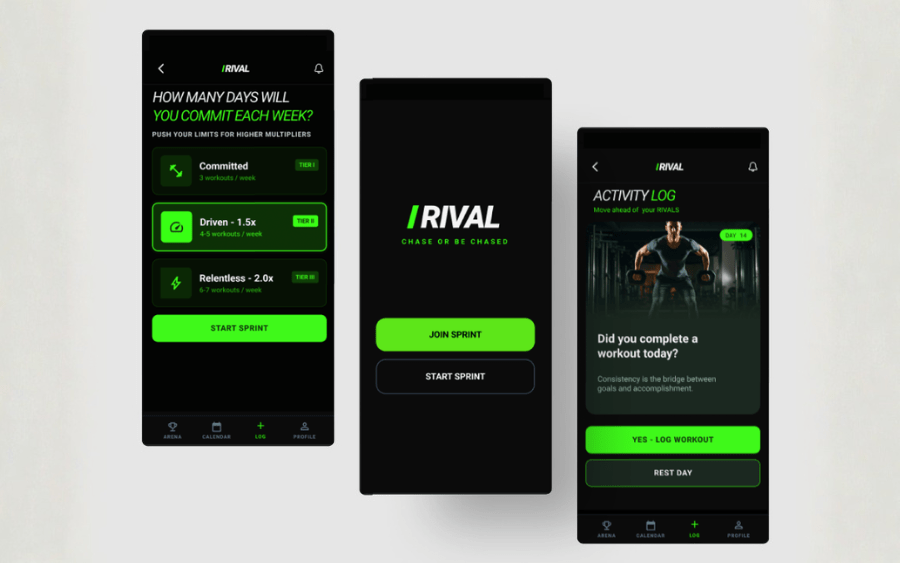
2-tap maximum to start a workout
Every additional step between "I'll work out" and "I'm working out" is a dropout opportunity. Entry was redesigned until it took two taps from launch to active session.
Decision 05
Reactions during active sessions
Encouragement mid-workout is far more motivating than post-workout praise. Real-time reactions tap into in-the-moment accountability.
Decision 06
Progress visible mid-challenge
Revealing standings only at the end removes the tension that drives effort. Real-time progress visibility keeps competitors engaged throughout.